ABOLITION FEMINISMS
  • Home
  • VOLUME 1
  • VOLUME 2
  • Bios
  • NEWS

Interview of contributor, Dayjha McMillan

10/1/2023

 
Picture
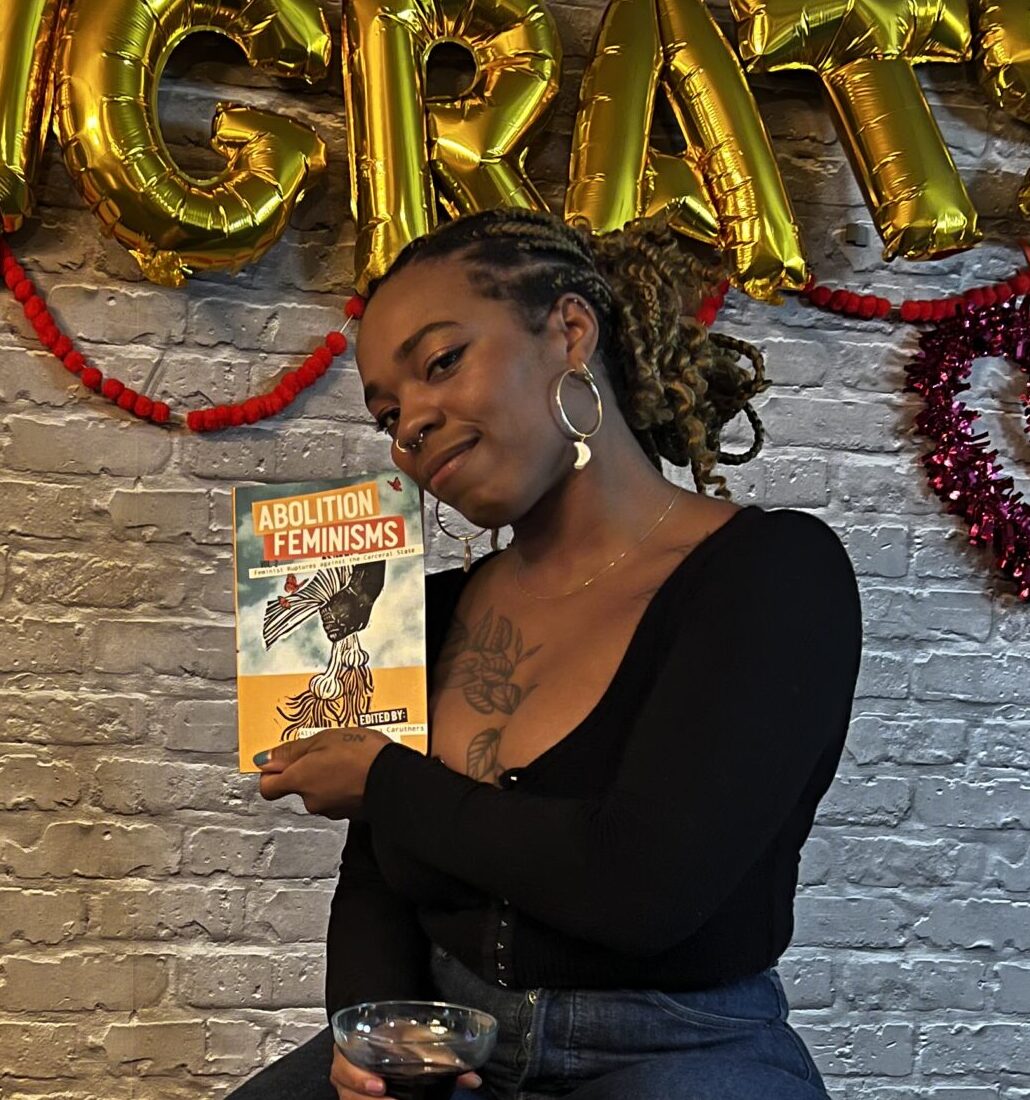
Dayjha McMillan photographed in the blog for Rooted in Vibrant Communities (RVC)

​Check out this wonderful interview of Dayjha McMillan, co-author of “ACAB Means Abolishing the Cop in Our Heads, Hearts, and Homes: An Intergenerational Demand for Family Abolition,” which is the first essay in Abolition Feminisms, vol. 2. Excerpt below:
Would you mind sharing a teaser with us? For folks who want a taste of the brilliance?
​

“Abolition feminism reminds us that getting rid of police and prisons means nothing if we do not abolish the ideologies, practices in effective economies of policing in our interpersonal relationships and communities. So, basically, this essay argues that unlearning the carceral system requires an unlearning of one of our most intimate institutions, which is family. So by family abolition, we refer to the positive expansive process of proliferating networks of care, love and support that crowd out rigid, hierarchical, privatized nuclear hetero patriarchal families.” 

Essentially, we were thinking about all these systems that are connected to policing and how the policing system began, which was slave patrols. We had to go all the way back. From there, we were thinking about the link between “inside the house” and “outside of the house” and policing being something that’s outside of the house…but that there are so many people who have experienced policing inside of the house and harm inside of the house. We were making the connection between white supremacy and this idea of family abolition. 

I think the pandemic helped us get to this understanding, too. All of us were stuck inside. And what does that mean for folks who experienced violence and harm inside of the home? We’re in a pandemic, and we know that police don’t protect us. They don’t serve us. Like, who do you call to help you? What do you bring from outside into your private sphere where there’s so much violence happening? Yeah, so it was  all weaving together and we were like, holy shit. Mind. Blown.

Can you explain a little bit about the way this particular essay is in conversation with the other pieces in the book? I noticed it’s very intersectional and interdisciplinary.

What’s really cool is that our essay is the first one in the book. In the foreword, they kind of talked a little bit about it as a starting point for what’s in the rest of the book. 
Volume One is definitely more of a historical landing point. It’s definitely more text rich…like, histories of abolition, if you will. And Volume Two is kind of like a resource book. I will say that we have a section in our chapter that asks where do we go from here? And what is built in place of abolition as you’re abolishing things? What are other possibilities for us? The rest of the book really is about other ways of being and living that keep us free.

Comments are closed.

    Archives

    November 2023
    October 2023
    April 2023
    December 2022
    August 2022

Powered by Create your own unique website with customizable templates.
  • Home
  • VOLUME 1
  • VOLUME 2
  • Bios
  • NEWS