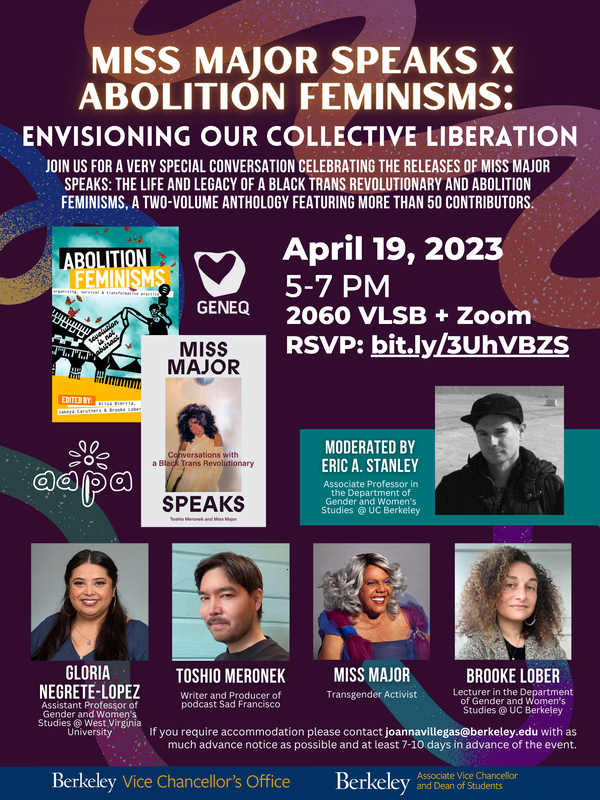
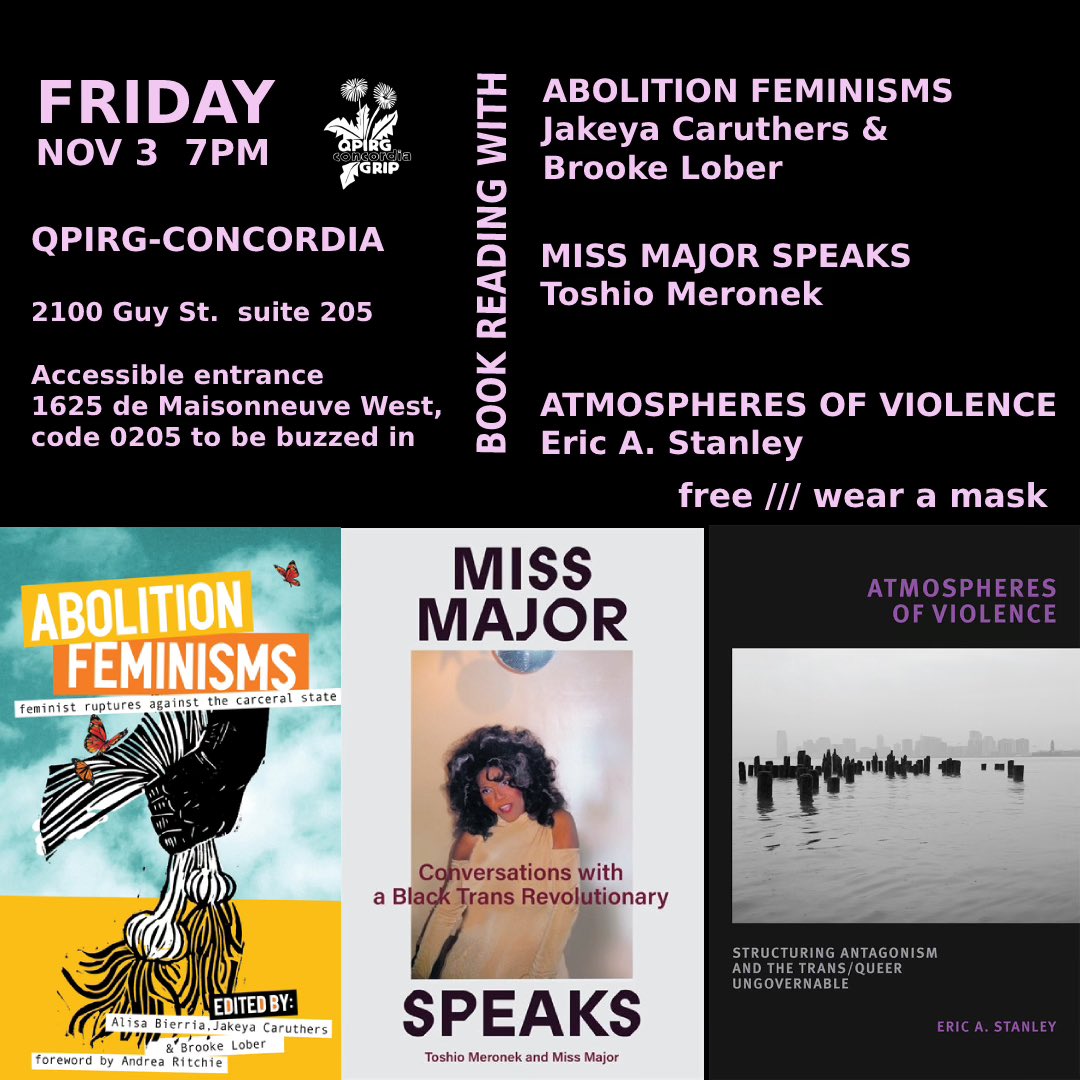
 BOOK READING!
Nov 3, 7pm, Montreal QPIRG-CONCORDIA 2100 Guy St., Suite 205 Accessible entrance: 1625 de Maisonneuve West, code 0205 to be buzzed in Featuring: Jakeya Caruthers & Brooke Lober, Abolition Feminisms Toshio Meronek, Miss Major Speaks Eric A. Stanley, Atmospheres of Violence 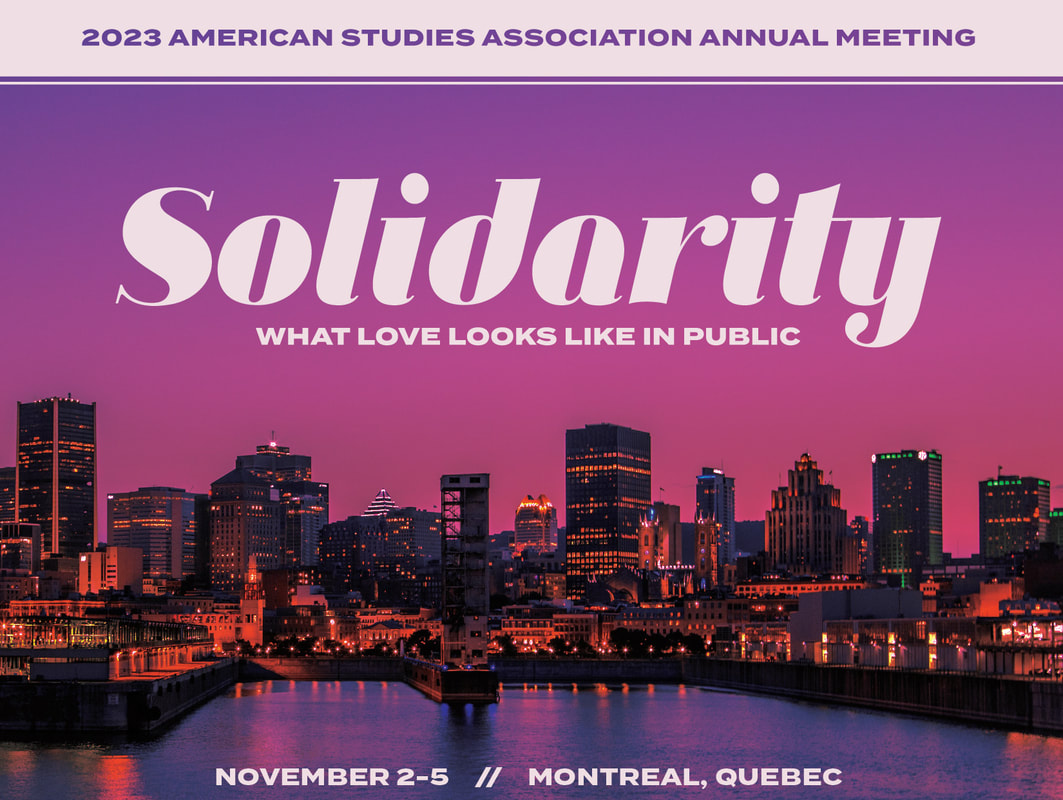 Join us in Montreal Nov 2-5, 2023
American Studies Association Annual Conference, Solidarity is What Love Looks Like in Public Abolition Feminisms: Ruptures Against the Carceral State Fri, November 3, 4:00 to 5:40pm Le Centre Sheraton Montreal, Salon Drummond East (Level 3) 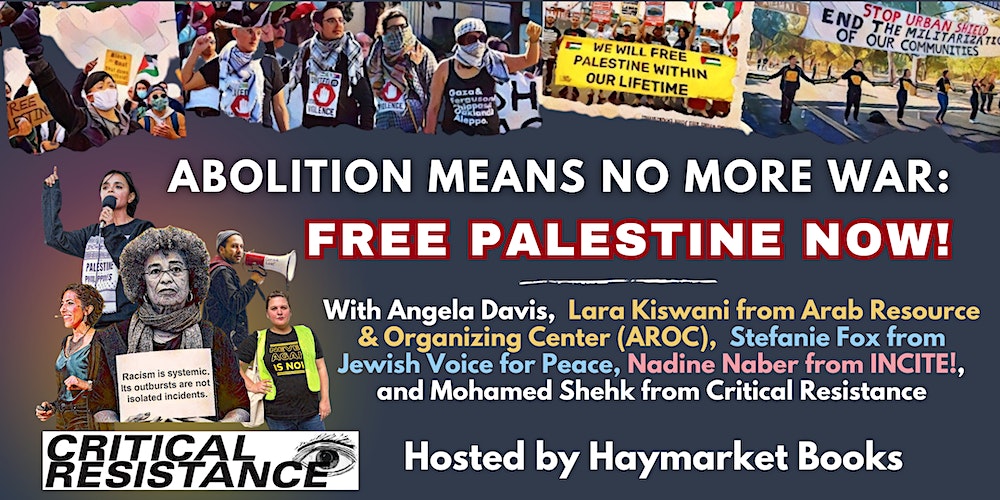 Abolition and the Liberation of Palestine
A conversation with Angela Y. Davis, Lara Kiswani (@AROCBayArea), Stefanie Fox (@jvplive), Nadine Naber (@incitenews), and Mohamed Shehk (@C_Resistance) Nadine Naber will discuss Palestine solidarity organizing and the anti-militarism campaign of the organization, INCITE!. Prof. Naber also describes this political work with Clarissa Rojas in Abolition Feminisms, Volume 1 in their article, "Genocide and “US” Domination ≠ Liberation, Only We Can Liberate Ourselves." Wednesday, November 1st at 7:00 pm ET RSVP to attend: www.eventbrite.com/e/abolition-and-the-liberation-of-palestine-tickets-744491984567 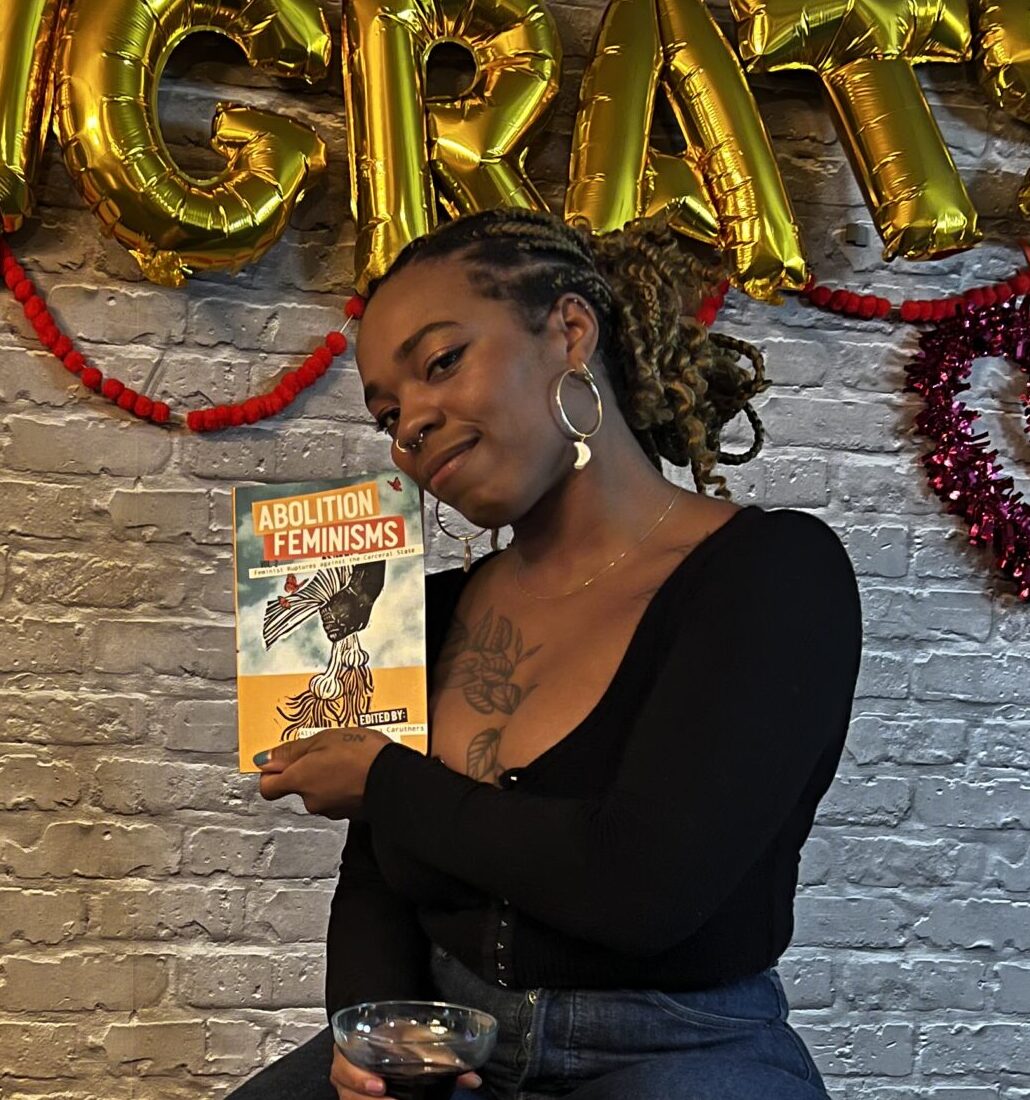 Dayjha McMillan photographed in the blog for Rooted in Vibrant Communities (RVC) Check out this wonderful interview of Dayjha McMillan, co-author of “ACAB Means Abolishing the Cop in Our Heads, Hearts, and Homes: An Intergenerational Demand for Family Abolition,” which is the first essay in Abolition Feminisms, vol. 2. Excerpt below: Would you mind sharing a teaser with us? For folks who want a taste of the brilliance? 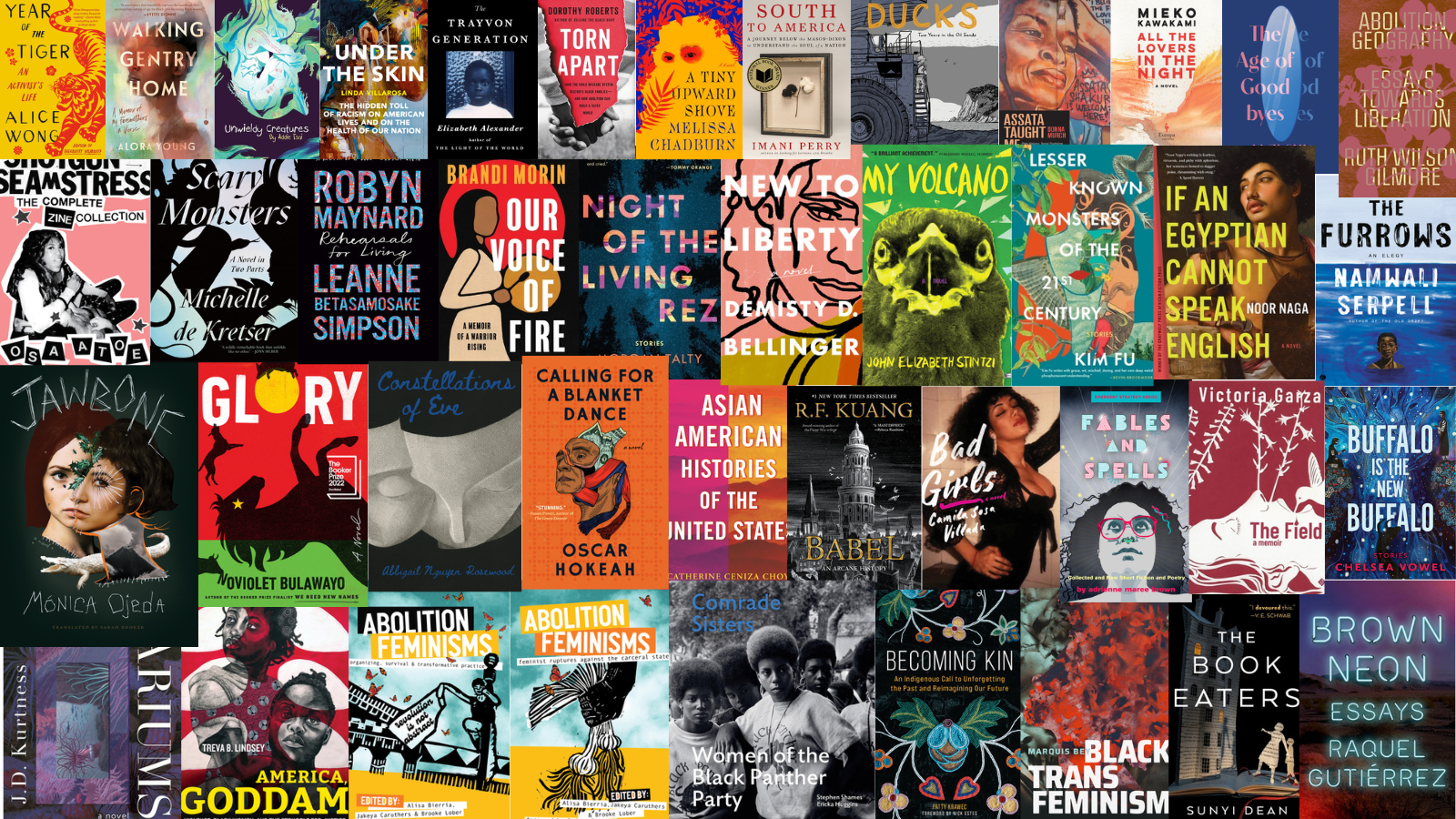 We're delighted to be included in Ms. Magazine's list of Books of the Year! They write: These groundbreaking volumes examine abolition based in Black and women of color feminisms, anti-violence organizing, survivor knowledge production, radical strategizing and more. Ms. Magazine also reviewed Abolition Feminisms, Volume 2 in November, writing: In similar groundbreaking fashion [to Volume 1], contributors continue to interrogate, dismantle and rebuild the state into our most radical abolitionist dream come true.  Join Abolition Feminisms contributors at the National Women's Studies Association, November 10-13, 2022 in Minneapolis! Our panel is entitled, "Abolition Feminisms: Ruptures Against the Carceral State." Also, please join us at the Haymarket Books table in the publications room to celebrate the launch of Volume 2! We're also excited that our comrades -- Angela Y. Davis, Gina Dent, Erica R. Meiners, and Beth E. Richie -- will be featured as conference keynote speakers to celebrate their groundbreaking book, Abolition. Feminism. Now.
More details to come... 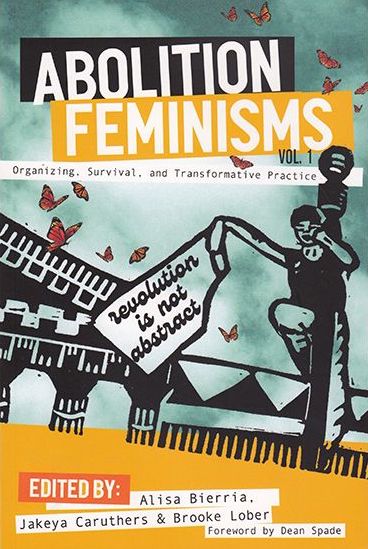 We're excited to announce that Abolition Feminisms, Volume 1: Organizing, Survival, and Transformative Practice is now available for purchase at Haymarket Books and your local independent bookstore! See the Volume 1 page for more details about the volume's essays and creative contributions! 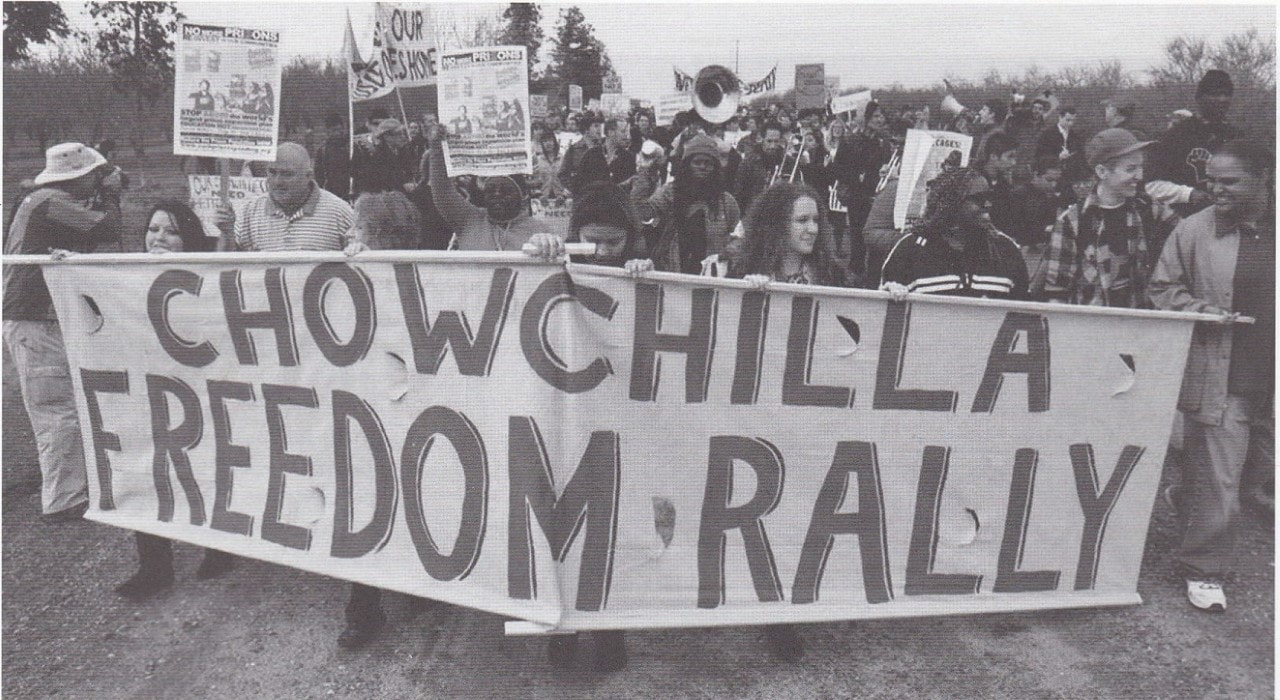 Inquest printed an excerpt from the article, "Caring Collectively: Twenty-Five Years of Abolition Feminism in California," from Abolition Feminisms, Volume 1! Featuring California Coalition for Women Prisoners (CCWP) members inside and outside of prisons who share reflections on CCWP's radical history, its contributions to the movement for abolition, and its practices of caring collectively, this article maps a critical juncture in abolitionist feminist legacies. "Caring Collectively" also marks the 25th anniversary of the founding of CCWP and is edited by Emily L. Thuma and Joseph Hankins, introduced by the editors and Romarilyn Ralston, and includes an afterword by Victoria Law.
Read the excerpt on Inquest here! |